Zurich
Liquid days, neon nights
Zurich deserves more time than just a layover between the airport and the Alps. This is a city where locals swim in the river at lunch, dine at Michelin Green Star restaurants and dance the weekend away without curfew. From the central Bahnhofstrasse, the city’s neighborhoods stretch out in every direction.
“In summer, the river becomes the beating heart of the city.”
As the Bahnhofstrasse leads you from the train station to Lake Zurich, leave behind the designer stores and step into the city’s local rhythm. Paths trace the lake banks for strolls and runs, or you can simply sit and enjoy the views with a takeaway lunch. Westward, the neighborhood of Enge’s lakeside Badi (public bath) is open year-round, offering summer swimming and winter saunas with cold lake plunges. For those who prefer indoor wellness experiences, the Roman-Irish baths of the Hürlimann Spa flow from room to room under the original arches of an old brewery. The spa’s rooftop pool, warm enough for all seasons, has an epic view across the city.
Leaving the lake behind, follow the streets into Wiedikon, where young chefs challenge the idea that Swiss food is just cheese, potatoes and chocolate. This area is where chefs can experiment, mixing immigrant culture with Swiss precision. One example is Chef Zizi, who emerged from the kitchen of three-Michelin-star chef Andreas Caminada. Zizi’s vegan empire, including Kle, helped kickstart Zurich’s Michelin Green Star movement. Zurich is now a leading European city for sustainable gastronomy, ahead of the movement’s philosophical heart, Copenhagen.
“Zurich proves Swiss dining is far more than cheese, potatoes and chocolate.”
Leaving behind the polished plates, Zurich West is where the city is at its most unguarded. The neighborhood built its identity around repurposed industrial buildings, a creative past still visible alongside the city’s tallest building, Prime Tower. Frau Gerolds Garten embodies this perfectly: a seasonal gathering place where locals come to eat fondue by the fire in winter and dance under open skies when the sun shines. Artisanal markets fill the gaps between seasons. Cult Gelateria di Berna rewards the inevitable queue with what locals consider to be the city’s best ice cream.
Across the green stretch of the Josefwiese park, an arcade of independent shops and restaurants lines the arches of the city’s longest railway viaduct.
Closer to Zurich’s main station, Langstrasse is the city’s most contradictory
neighborhood. Natural wine bars like Gamper and destination restaurants such as Gül sit streets away from the red-light district and clubs that keep going long after everywhere else has closed.
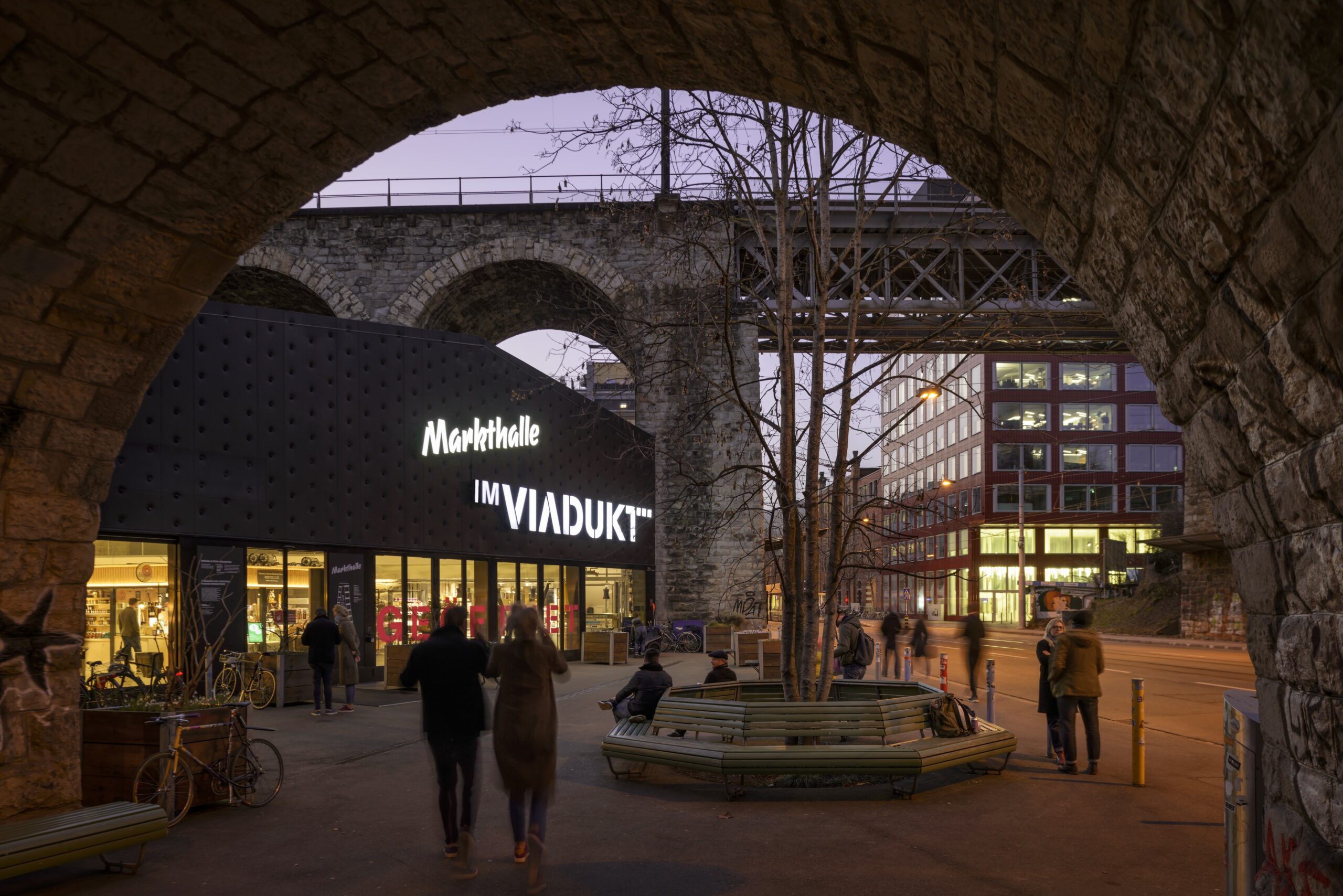
“By day, river swims and café culture. By night, Zurich comes alive.”
Being one of the most expensive cities in the world doesn’t mean everything requires a banker’s budget. Kunsthaus, Switzerland’s largest art museum and home to an extensive Dada collection and works by Swiss artist Alberto Giacometti, opens free on Wednesdays. The Swiss National Museum’s permanent collection is free every day. At ETH Zurich, Einstein’s alma mater, free tours include a visit to the Nobel Prize winner’s former locker.
Escaping the trams and foot traffic of Switzerland’s largest city is as easy as heading uphill. Flanked by Uetliberg to the west and Zürichberg to the east, the forest is never far. On weekends, locals take the Dolderbahn up to the Dolder Grand and hike deep into the forest, stopping at Wirtschaft Degenried for brunch or lunch. Detour to the Lorenkopf and climb the 150 steps for a view back over the city and the Alps beyond. In winter, the same Dolderbahn brings locals back up to one of Europe’s largest artificial rinks.
Come December, the city glows. Lucy, named after the Beatles song, leads a path of light along the Bahnhofstrasse from the train station to the lake. Locals gather at Christmas market stalls for lunch or after-work Glühwein, while choirs perform nightly on a stage shaped like a giant Christmas tree. The Illuminarium light festival brings the Swiss National Museum’s façade to life after dark. Meanwhile, hundreds of swimmers dressed as Samichlaus (Santa Claus) plunge into the cold waters of the Limmat. In summer, the river becomes the beating heart of the city. Locals swim at lunch, float downstream and dry off on the wooden decks of the Flussbäder (river baths). The Limmat threads through it all.