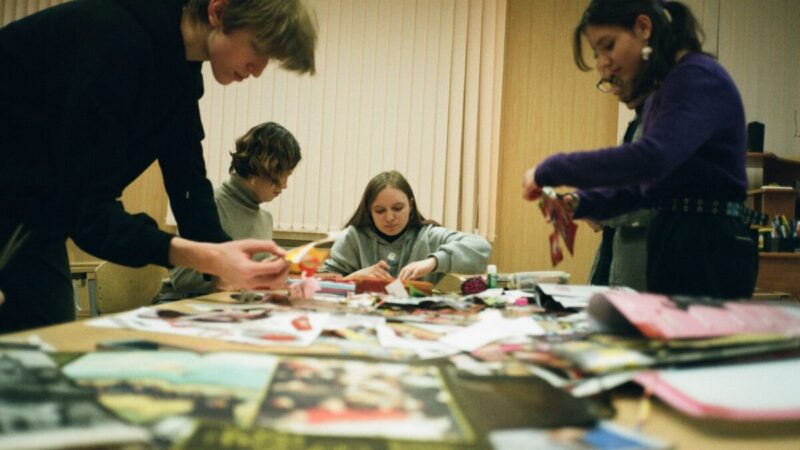

Clark Fox, one of the inaugural PS1 artists in the 1970s, discusses his legendary life as a career retrospective opens in NYC.
Clark V. Fox, a Native American artist of Cherokee descent, calls himself a “hostile Indian who went off the reservation.” There’s a smile behind the provocation, but Fox was an early artistic rebel who left his mark on movements from D.C. to New York, earning a reputation as the Godfather of Modern Underground Art.
A second-generation Washington Color School artist, Fox championed generations of outsiders through alternative art spaces like MOCA-DC and Flat, including then-emerging artists like Shepard Fairey and Ron English. His work made a cameo with Dustin Hoffman in the 1976 classic All the President’s Men, and his art-punk band Twisted Teenage Plot opened for Fugazi in front of the White House. Along the way, he crossed paths with David Lynch, Jim Morrison and Andy Warhol.
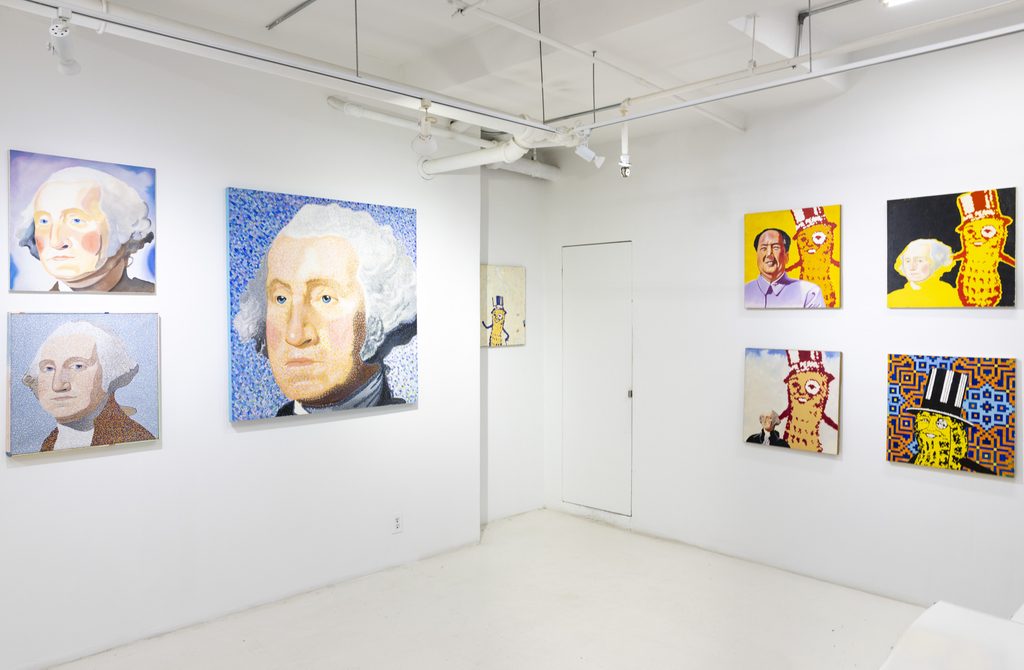
His latest exhibition, Beyond Obedience, is on view at Ethan Cohen Gallery on West 19th Street in Manhattan through January 16, 2027. Meanwhile, the gallery’s KuBe Art Center in Beacon, New York, is showing a companion exhibition featuring variations on Fox’s iconic George Washington portraits. LOST iN’s editorial director spoke with Fox about his extraordinary career.
You’re a veteran of so many iconic scenes that I have to ask: Any good Andy Warhol stories?
When I went to school, this girl Cathy looked like a Madonna from a Raphael painting, and she became my girlfriend. It turned out she’d been the president of Andy Warhol’s fan club when she was in high school. Then she got a job with Andy. He was a devout Catholic, so I think Andy liked that she looked so religious.
I was 19 in the summer of 1966, and I was able to go over to his studio a number of times and hang out. Andy asked me to be in one of his movies, but Cathy told me I would have to take my clothes off for the movie. I took a pass on the offer, which, in hindsight, was not a good move.
Some people really hate Warhol, but he revolutionized art in a funny way. It needed some kind of something, I guess. If it hadn’t been him, somebody else would’ve done it. I saw the Velvet Underground playing on St. Mark’s Place, and it was just great.
How did she describe working for Warhol?
I’d hang out at Cathy’s pad, and she had this whole wall covered with small Andy Warhol paintings. He wasn’t anything [then] compared to today. I was like, “Wow! Look at all those paintings!” She’d go, “Yeah, Andy says he’s broke all the time, so, ‘Oh, Cathy, why don’t you take one of my paintings?’” I’d be like, “Oh, Andy, I love your work, but I’ve got to eat.”
About a decade ago, we decided to look her up online. Turns out Warhol had given her a two-foot-by-two-foot self-portrait. The story was that he hadn’t paid her in a long time, so he went, “Cathy, I got a painting for you.” She basically had it in a closet for most of her life, and she finally sent it to auction and got about six and a half million bucks. Her payday finally came in, with interest!
You know, Gore Vidal said Andy Warhol was the first genius he’d ever met with a 60 IQ.
You started the Museum of Contemporary Art (MOCA) in D.C. How was the scene back then?
D.C. was a really bizarre town. It’s all power and politics and money, and they didn’t really have a big interest in culture. The whole arts scene got a crummy rep, and hardly anybody made any money, but it was easier to live there than in New York City. I graduated from high school in Alexandria, Virginia, and I had an art studio with David Lynch and Jack Fisk. Jim Morrison, the guy from The Doors, lived down the street.
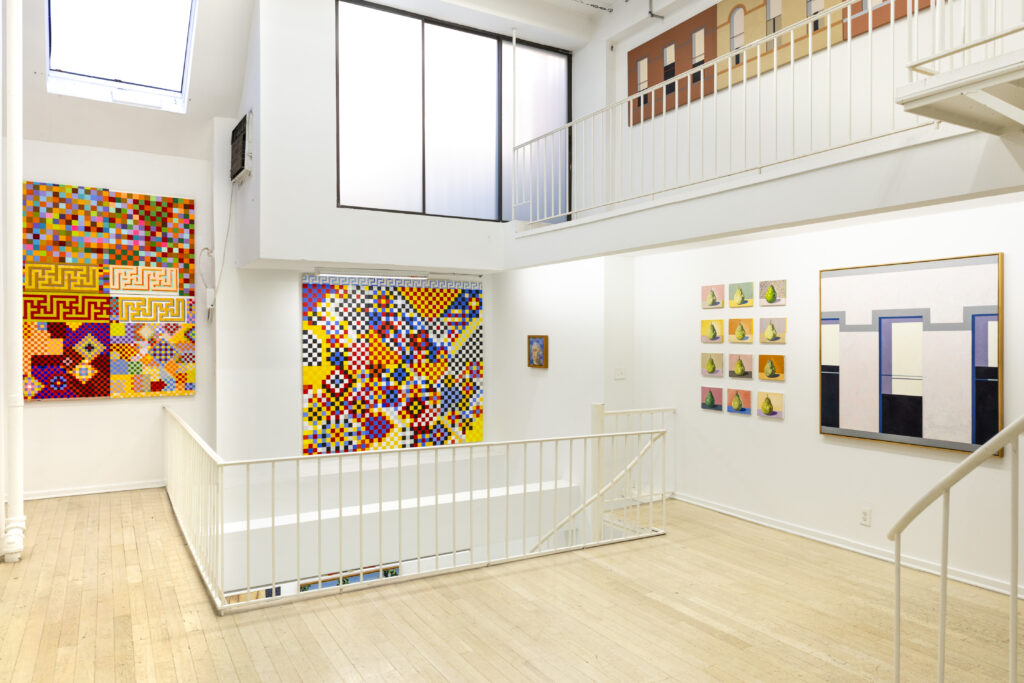
I dug D.C. in a way. I had this patron who gave me the space in Georgetown to do my thing, and he came up with a bunch of money to promote parties. I did that for 14 years. I actually changed things. I helped get the street art thing going with Shepard Fairey and a number of the early guys. I was influenced by street art from the early ’70s, from the subway guys. All my girlfriends, when we broke up, stole my art, so I don’t have much from back then. One girl even stole my Picasso and Manet.
Did you experience much pushback in D.C.?
I got a lot of resistance because it’s such a conservative town. Ron [English] was getting a ton of shit. See, I’ve been working with him since 1988, and I remember how he was dodging bullets all the time for a really long time. We just kept pushing on. We didn’t really know that things were going to change, but I think the art world has. Even though the old guard is doing their same old stuff, it’s a lot more exciting now.
Tell me about the arts studio in Alexandria.
The studio was with David Lynch and Jack Fisk in Old Town Alexandria, in a rundown two-story Victorian building. Fisk is married to the actress Sissy Spacek, and he’s one of the greatest set designers in film today. Both of those guys were really dynamic even in high school. We were all kinda different artists instead of normal students. We all competed in shopping center competitions. We split the rent for the studio. I had two newspaper routes, and David and Jack worked at a private drugstore, making deliveries with Jim Morrison. They created this party room that was really wild. They activated the space with lighting and sculptures that gave it a three-dimensional quality. They really knew how to manipulate the space. We hung out from ’62 to ’65, and then again after high school in Philadelphia.
I remember telling Lynch and Fisk that painting is cool, but filmmaking is cooler, and then they both ended up being big shots in the motion picture industry. Jack invited me out to Los Angeles to work on movie sets, but I wanted to stick to art. Plus, I never drove a car and still don’t to this day.
Any good stories from hanging out with them?
Lynch called me up and said, “Hey, Clark. We want to go see this movie. You want to come with us?” It was The Sound of Music. I said, “I don’t know. I’m not big on musicals.” He said, “Oh, come on, we’ll come pick you up.” Jack’s mother came, and we went to this movie house in D.C. When the film was over, I was like, “This film really sucks.” David and Jack go, “Hey, Clark, can we watch this film again?” I had to stay because they had the car.
You could drink at age 18 back in those days, so after we watched the movie again, we sat in this bar. Lynch was totally zonked out on this film, and we had this heavy conversation about it. Jack and David decided to fly to Austria to study with Oskar Kokoschka, that wild Expressionist painter. Then they went out to look for jobs, and people said, “What, are you guys crazy? You can’t get a job here.” They didn’t have any money, so they had to come back. It was so weird that a movie would get them so inspired that they wanted to go to Austria.
Did you have any interactions with Jim Morrison back in the day?
Not much. He must’ve been about three or four years older. The three of them worked at this drugstore back when they had mom-and-pop drugstores. A number of years before I met Lynch, I used to see Jim walking around, and he looked like John Lennon with blond hair. He hadn’t dyed his hair yet in those days. He always wore a tie and stuff like that. He seemed kind of morose.
Well, I’d see this funny-looking pale guy walking around with these little bags, and he was delivering drugs, legal drugs. He became good friends with those guys. He went to a different high school, but he worked at the drugstore, so when I’d go in looking for either David or Jack, a lot of times he’d be there by himself. I might say, “Hey, how are you doing? Blah blah blah. Is Jack here or David?” That was pretty much my thing with him.
High school was weird. It was a depressing time in a way until the Beatles happened. People were stuck in these high schools in the sticks of Virginia. A lot of Jim Morrison’s Lizard King stuff was written in high school. He ended up developing those ideas later, turning them into art and music. He actually went to film school.
You’ve said the Beatles changed everything. How so?
Oh, man, before the Beatles, they had doo-wop, these groups like the Orioles. Rock ’n’ roll was hillbilly. Then the Beatles turned it into art. The only Beatle I liked was Ringo.
You don’t usually hear that.
The second one I would’ve liked was George. He was super talented, but after John got with Yoko Ono, I started to think he did his best music with Yoko. That’s pretty harsh, but it’s funny. The first Beatles show in the United States was at the Washington Coliseum, right near the railroad station. I didn’t go, but David Lynch did, and I think it was a real turning point for him.
I was a Rolling Stones guy. I first saw them in 1966. I liked the Black blues stuff. Now everything’s at everybody’s fingertips, but back then, you didn’t know what records to buy. In 1970, I had an apartment in New York for 70 bucks a month, and 70 bucks a month was hard to come up with. Musically, I was stunted. They just had these AM radio stations, and it was really hard to get blues stuff. The Rolling Stones opened it up a little more.
You once studied under a Japanese master. In what ways did the influence of Asian art give you a different style than other artists coming up at the same time?
I studied under Un’ichi Hiratsuka at the Japan Society in Washington in 1962. After studying with him, my style flattened out a lot, and that’s one reason I did abstraction. I saw a simplicity in Asian art that really appealed to me. I became a second-generation Washington Color School painter when I was 21 years old. All the other artists were in their 40s and 50s. Impressionism, that whole style, was influenced by Japanese prints in the 1860s. That’s when Western art started getting flatter and flatter.
What was happening in European art before this?
The classical guys came out of the French Revolution, and the Impressionists were kind of a combination of Classicism and Romanticism. After Rococo [in the 18th century], there was a movement, Neoclassicism, but they were modeling it after Roman art. So everything was really blah blah blah, and all of a sudden these guys like [Édouard] Manet and [Claude] Monet started flattening stuff out and using vivid color. The academy people from the old days were going nuts. They were like, “What the hell is this shit?” They had a really hard time, and Impressionist paintings were going for chump change. They were really popular with American collectors for some weird reason, but it took a while before it all changed. Then you started getting people in the late 1800s like [Paul] Cézanne, who had a huge influence on Pablo Picasso, and then Picasso influenced thousands of artists.
As far as your paintings and portraits, was there a particular piece you created that really set the tone for the style that you would develop over the years that followed?
I liked to copy Rembrandt at the National Gallery and pretty much taught myself. Politically speaking, my stuff with the dots looks a lot like Georges Seurat, the French Post-Impressionist. Then there was a school of guys who came after him. They were like anarchists in Italy who painted in that style. I’m just continuing the tradition of the anarchist style from France and Italy. Seurat was like the anarchists, but he came from a well-to-do family, so he didn’t have to suffer like a lot of people in France. He died in his early 30s, so he only had a 10-year career.
A Sunday Afternoon on the Island of La Grande Jatte was one of the first paintings to show workers having any leisure time. A lot of his paintings were just paintings of workers. He didn’t really paint the bourgeoisie like everybody else. The outfits the workers wore in the paintings, even their hats, signified what class they were from. I think he may have only sold two paintings during his lifetime. He was like [Vincent] van Gogh.
Meaning he became famous after his death?
Yeah. It was really crummy. They did this protest art fair outside [at the Salon des Indépendants]. It was raining, and he caught this weird influenza-type thing. He had a mistress, Madeleine Knobloch, who was actually a model. She inherited all his stuff and sold it to this art critic and then just completely disappeared. They figure she may have gone back to Germany, but nobody ever heard of her again.
What’s a memorable art show you curated?
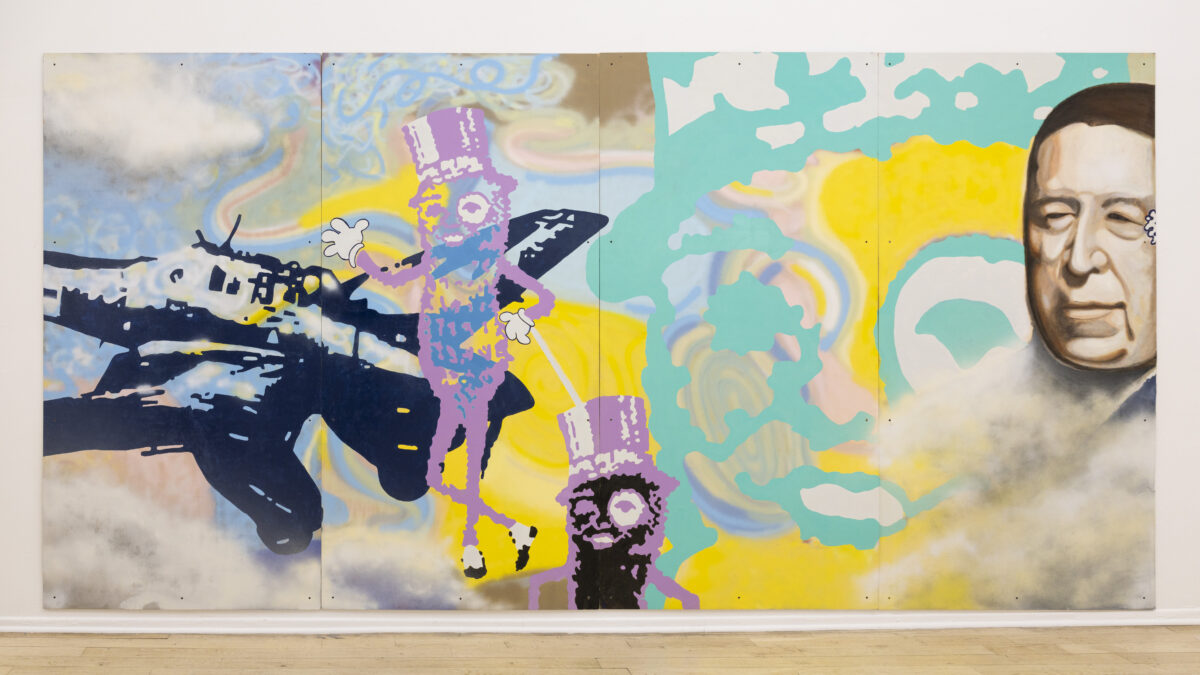
One of the best was the Power of Pathos show at the Station Museum of Contemporary Art in Houston, Texas, in July 2006. It was the first big museum show that Daniel Johnston and Gibby Haynes [of Butthole Surfers] had done at the time. It was a dream show. At the opening, Kinky Friedman showed up, and he was running for governor at the time. Ron English did this Guernica painting that was one foot bigger than the original. It’s hard to find a piece of canvas that long, but they did. Anthony Ausgang created a new style of painting for the show. Daniel played at the opening with his amazing band. My painting was 24 feet long to complement Ron’s. It featured a Stuka Ju 87, the type of plane used to bomb Guernica. The show really defined Pop Surrealism at its best. They said it was one of the most inspiring shows Houston had seen, and it really got people cranked up.
What about a favorite music memory?
Somebody told me about Jimi Hendrix: “Oh, man, this guy’s playing in town. You’ve got to go see him.” Hendrix was opening for the Monkees on tour. Can you imagine that? He was so grossed out that he bailed, and he ended up in D.C. in the summer of ’67, just after Monterey Pop. These wacky hippies had a club called the Ambassador, which was an old movie, and he played several nights.
Everybody was stoned there but me. I was about 10 feet away from Jimi Hendrix and the Experience. I went to three nights of shows. He was playing two shows a night, and you could stay for the second show. It cost $2.50 for both shows. I was so burned out from the electricity that he generated that I couldn’t make it the fourth night. That was my greatest rock ’n’ roll story. Hendrix at his peak at that time.
That’s amazing.
Yeah. He’d worked with the Isley Brothers and had all those syncopated movements. It was like a magic act. Did you ever go to the Magic Castle in Los Angeles?
Yes, many times.
I had a girlfriend who worked there, so I could get in for free and see the shows over and over again. I don’t play cards, but I’d go to these card tricks. This guy would find some attractive girl every time and go, “Oh, would you help me? Here, pick a card.” At the end of the act, it was always the three of clubs. Every time.
Jimi Hendrix’s act was the same thing. Although it looked so spontaneous, he was almost like a wild acrobat. He did his acrobatics and stuff like that. He could do it over and over again and make it look so fresh every time. It was unbelievable.
The last time I saw Jimi Hendrix was at this place where I basically needed binoculars to see him. The crowd went nuts, but it was nothing compared to seeing him in a small club.
These are amazing stories.
The weird thing is that my stupid brain can’t remember anything. Then I’ll be with people who mention somebody, and it’s like, “Oh, yeah, I hung out with that guy.” It’s really crazy. I just painted a lot of the time, and I thought I had a boring life, but it turns out it wasn’t so boring at all.